Your front desk should not decide how many patients you lose.
AI intake, missed-call recovery, consult follow-up and patient workflows, built around your practice, with sensitive AI processing kept under your control.
The patient chain, automated end to end
- Missed call to text response
- Qualification
- Consultation booking
- Reminders
- No-show recovery
- Post-consult follow-up
- Treatment-plan follow-up
- Reactivation
- Reviews
If your practice bills insurance, verification runs the same way, as one more step in the chain.
And the desk work behind it
- Sorting the inbox
- Keeping the patient record current after a visit
- Answering the routine questions about hours, directions and what to bring
What an AI receptionist for a medical office actually does
Most practices do not lose patients at the consult. They lose them in the ninety seconds when the phone rings and nobody is free to pick it up. The caller does not leave a voicemail. They call the next clinic on the list.
The receptionist workflow answers that call, or texts back the second it goes unanswered. It asks what the caller is calling about, what treatment they are interested in, when they are free, and whether they have been in before. It offers real appointment slots from your own calendar rather than promising a callback. If the caller wants a human, it says so plainly and routes them to one.
Where it stops is the part worth reading twice. It does not give clinical advice, it does not triage symptoms, and it does not tell anyone whether they should come in. Anything that sounds clinical goes to a person on your staff. That boundary is written into the workflow, not left to the model's judgment.
Under California law, a consumer-facing bot has to disclose that it is a bot in the contexts the statute covers. We build that disclosure in from the start rather than bolting it on when somebody asks.
Transcription and chart notes, without shipping the recording out
Consult recordings, intake forms and clinical notes are the highest-value text in the practice and the most sensitive. Medical transcription AI that runs in your building turns a consult into a structured note, files it against the right patient, and pulls out the follow-up tasks that would otherwise live in somebody's memory.
A person on your staff reads and signs the note. The system drafts, it does not sign. That is the same rule that applies to every other piece of output here.
The reason to run transcription locally rather than through a hosted AI scribe is narrow and practical: in a covered practice, a recording of a patient visit is protected health information from the moment it exists, and a model that runs on hardware you own does not create a new vendor to vet, a new retention policy to read, or a new place your recordings are stored.
Why it stays local
Recordings, intake forms, chart notes and photos are sensitive. Your sensitive AI processing for this data stays under your control, not on a public AI model.
The same goes for the people, not just the machines. The staff member who reads what the system drafts is someone you hired and can walk over to, not a stranger overseas working inside your patient inbox. Human review is a safeguard, not a compliance guarantee.
Before-and-after photos deserve their own line. They are identifiable, they are clinical, and in an aesthetic practice they are also the marketing asset. Keeping the model that reads them on a box in your building means the same file does not have to be handed to a third party to be useful to you.
How on-premise AI works, and what a HIPAA-compliant LLM setup does and does not mean
HIPAA-compliant AI, said honestly
There is no such thing as a HIPAA-compliant AI tool you can buy and be finished. HIPAA compliance is a property of your practice's whole program, not a badge on a piece of software. Any vendor who tells you their product makes you compliant is selling you the wrong sentence.
What software can do is make compliance reachable. Running the model on hardware you control removes a class of questions that a hosted AI tool forces you to answer: where the data went, how long it is kept, whether it trains anything, which jurisdiction it sits in, and who at the vendor can read it.
Two things you still owe, whatever you install:
- The HIPAA Security Rule on your own box: the risk analysis, access control, audit logging, encryption at rest and in transit
- A written record of which workflows touch protected health information and which do not
Both of those are in the audit, and both are billable compliance work rather than something I pretend is free.
The compliance part
Your practice still owes the HIPAA Security Rule on your own box: the risk analysis, access control, audit logging, encryption. That is in the audit. When Akopi creates, receives, maintains or transmits PHI on your behalf, we execute a BAA.
The default here is to sign the BAA rather than argue about whether maintenance access technically requires one. If I can reach protected health information while I am fixing something, the paperwork should already say so, and my access should be scoped and logged.
You also get the architecture statement as a contract exhibit: what runs locally, what goes to a frontier model under what written data classification, where the logs live, and who holds the keys. It is written to be handed to whoever does your compliance review without a translation layer.
Concierge, private-pay and multi-treatment practices
Practice automation looks different when the patient is paying out of pocket. The follow-up matters more, the treatment plan is a sales conversation as well as a clinical one, and reactivation is most of the growth. Those are exactly the sequences that get dropped first when the front desk is busy, because none of them has a patient standing in the lobby.
Medical practice automation on this system means those sequences run whether or not anyone remembers them: the consult follow-up, the treatment-plan check-in, the reactivation message to a patient who has not been in for a year, and the review request after a good visit.
What I will not claim
I am not going to put a savings percentage or a revenue number on this page. What a recovered consult is worth depends on your treatment mix, and you know that number better than I do. What I will do is instrument the workflow so that after ninety days you can read the before and the after yourself.
The other honest limit: local models are strong at intake, classification, extraction, transcription and drafting. The hardest reasoning still tends to go to a frontier model, and when it does, it goes out on your own account, with the minimum approved context for that task, under a written rule.
How it goes
- Twenty minute call, free.
- The audit: half a day in your practice, the workflow map, the compliance check, and one thing installed that same week.
- The proposal, handed to you inside the audit readout.
- The install, four to six weeks, then go live.
The demo
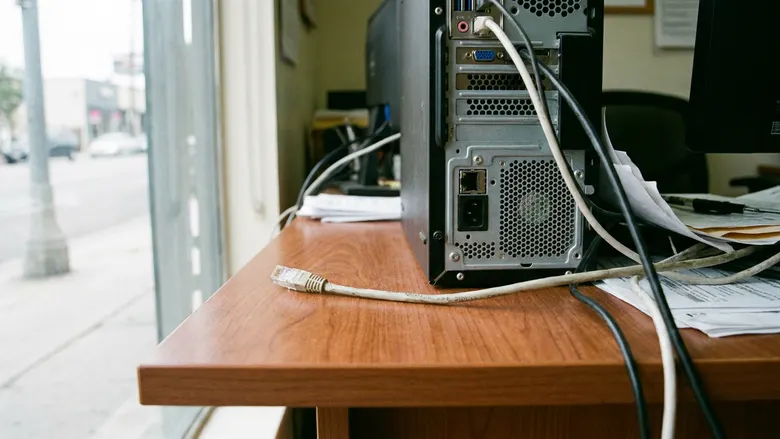
Come watch it run, then watch me unplug the network.
Who this is for
Trades and home services get their own page too.
Start with the audit
The Operator's AI Audit: $3,500. Credited in full against the Private AI System if you go ahead within 30 days.