What is actually running.
Thin on purpose at launch. Honest beats padded. Five case studies, each one a system I run or built myself, no numbers I cannot show you the before and after for.
The construction lead system
Problem. Leads came in by phone and by text at all hours, and nobody was reliably first to respond. A missed call was a job somebody else booked.
Built. A speed-to-lead workflow that answers a missed call, replies to a new lead right away, and logs everything into the CRM without anyone retyping it.
Result. Each lead that reaches the pipeline gets a fast reply, whether or not someone is at a desk to catch it. This runs on my own construction company today.
Under the hood: missed call detected → text reply drafted and sent → lead logged to the CRM → follow-up sequence starts.
Email triage
Problem. The inbox absorbed hours a day. Real questions sat mixed in with noise, and nothing was sorted by what actually needed a reply.
Built. A triage workflow that reads incoming mail, drafts a reply for the routine ones, and flags anything that needs a human decision.
Result. The inbox gets a first pass automatically, and what reaches a person is the mail that actually needs a person.
Under the hood: mail read → classified routine or needs-a-person → routine mail gets a drafted reply → the rest is flagged.
The review-request engine
Problem. Happy customers rarely leave a review unless somebody asks them, and on a busy day nobody remembered to ask.
Built. A post-job trigger that sends the review request automatically once a job closes out, with a drafted reply ready for whatever comes back.
Result. The ask goes out on a schedule, without someone remembering to send it.
Under the hood: job marked closed → review request sent → a reply draft waits for whatever comes back.
The cultivation dashboard
Problem. Production numbers, inventory and quality logs lived across separate systems, and nobody had one place to see how a batch or a room was actually doing.
Built. A dashboard that pulls production tracking, inventory and quality logs into one screen, updated from the same systems the floor already uses.
Result. One place to look instead of five, whenever a number is needed.
Under the hood: production, inventory and quality systems queried on a schedule → data normalized into one set → the dashboard renders from it.
The clinic engagement
Problem. Front desk time went to intake, scheduling and insurance verification instead of patients.
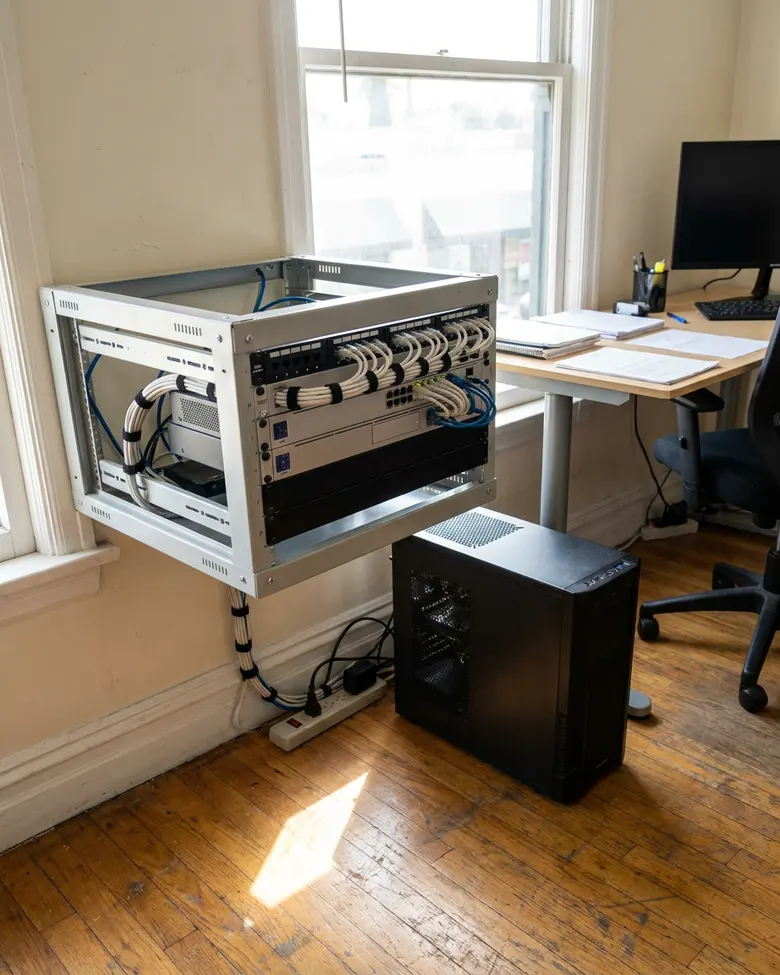
Built. Intake and forms taken off paper, the front desk phone covered after hours, call transcription into the chart, and review requests sent after a visit, all on a box in the clinic's own building.
Result. Front desk intake now runs through the same system, workflow by workflow, with a named person on staff still reading anything that touches a patient.
Under the hood: call answered by the local voice agent → visit transcribed and filed to the chart → intake captured digitally → review request sent after the visit.
What I will not put here
I am not going to post a savings percentage. Every number on this page is one I can show you the before and after for.
Who this is for
Trades and home services get their own page too.